
Low Back Pain Treatment in Lincoln, NE
Low back pain is one of the most common reasons people see a chiropractor, and most episodes get better with the right mix of hands-on care, movement and time.
At Lincoln Family Chiropractic in Lincoln, NE, we find what is driving your pain, whether a stiff joint, an irritated disc or tight, overworked muscles, and build a plan to calm it down and keep it from coming back.
Reviewed by Austin Weaver, D.C. · Updated November 2026
★★★★★ 5.0 on Google (240+ reviews) · 3 doctors · Serving Lincoln since 2012 · Same-week appointments · Most insurance accepted
Low Back Pain at a glance
- Common causes: Lifting, bending or twisting strains; Long hours sitting or driving; Facet joint irritation and arthritis (facet arthropathy)
- How we help: Chiropractic adjustments and Cox flexion-distraction; Spinal decompression; Soft-tissue therapy
- First visit: about 45 minutes: history, exam and a clear plan
- Led by: Austin Weaver, with our full team
- Call: (402) 484-5166 or schedule online
Understanding Low Back Pain
Low back pain is pain, stiffness or muscle tension between the bottom of the ribs and the top of the legs. It can come on suddenly after lifting or twisting (acute), or build slowly and linger for months (chronic). Most low back pain is mechanical: it comes from the joints, discs, ligaments and muscles of the spine, not from a serious disease.
Common causes include:
- Lifting, bending or twisting strains
- Long hours sitting or driving
- Facet joint irritation and arthritis (facet arthropathy)
- Disc bulges or herniations
- Sacroiliac (SI) joint problems
- Weak core and hip muscles
- Pregnancy and postpartum changes
How We Treat Low Back Pain
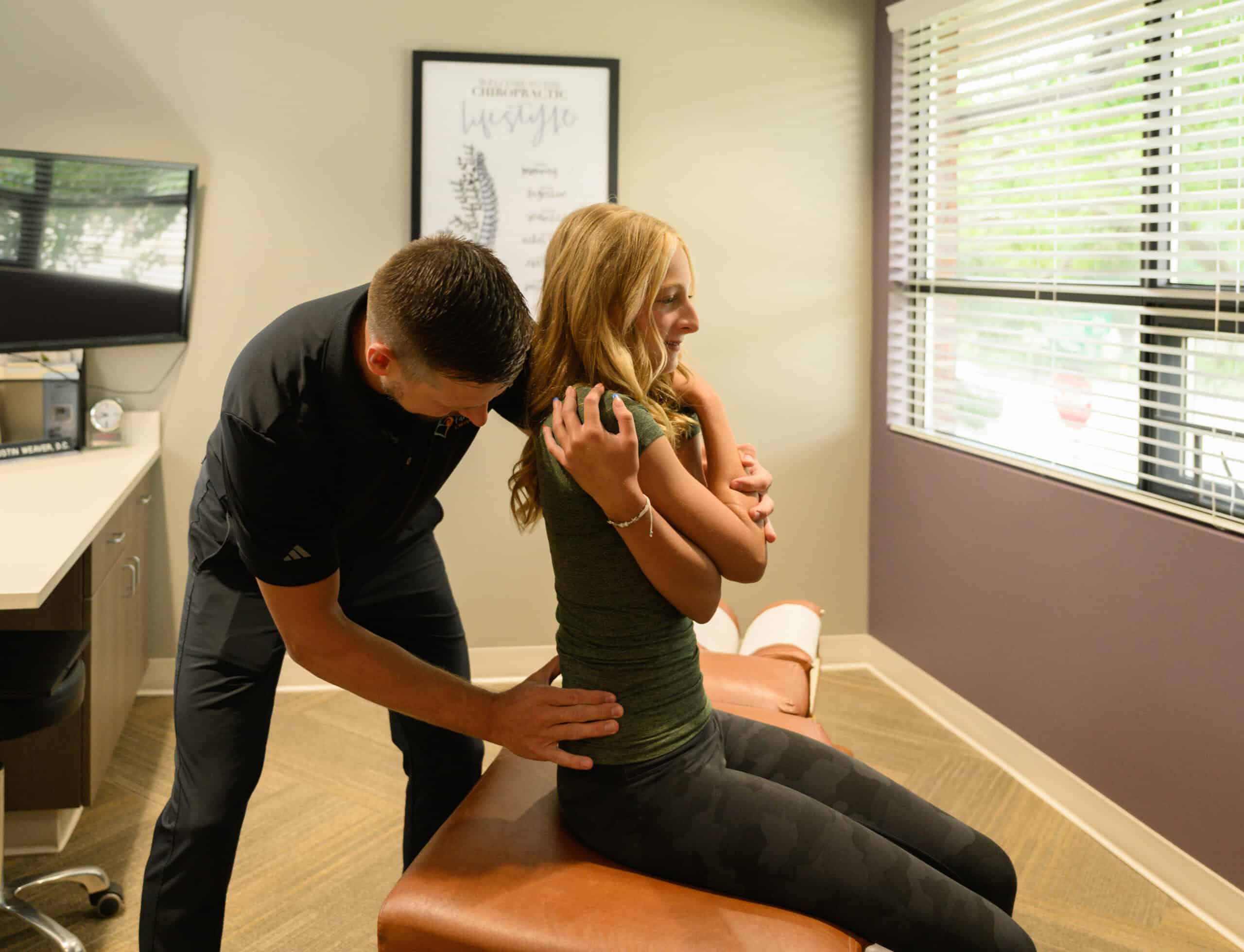
- Chiropractic adjustments and Cox flexion-distraction: restore motion to stiff joints and ease pressure on irritated tissues
- Spinal decompression: gentle, computer-controlled traction for disc-related pain
- Soft-tissue therapy: Active Release Technique, IASTM and dry needling for tight, guarded muscles
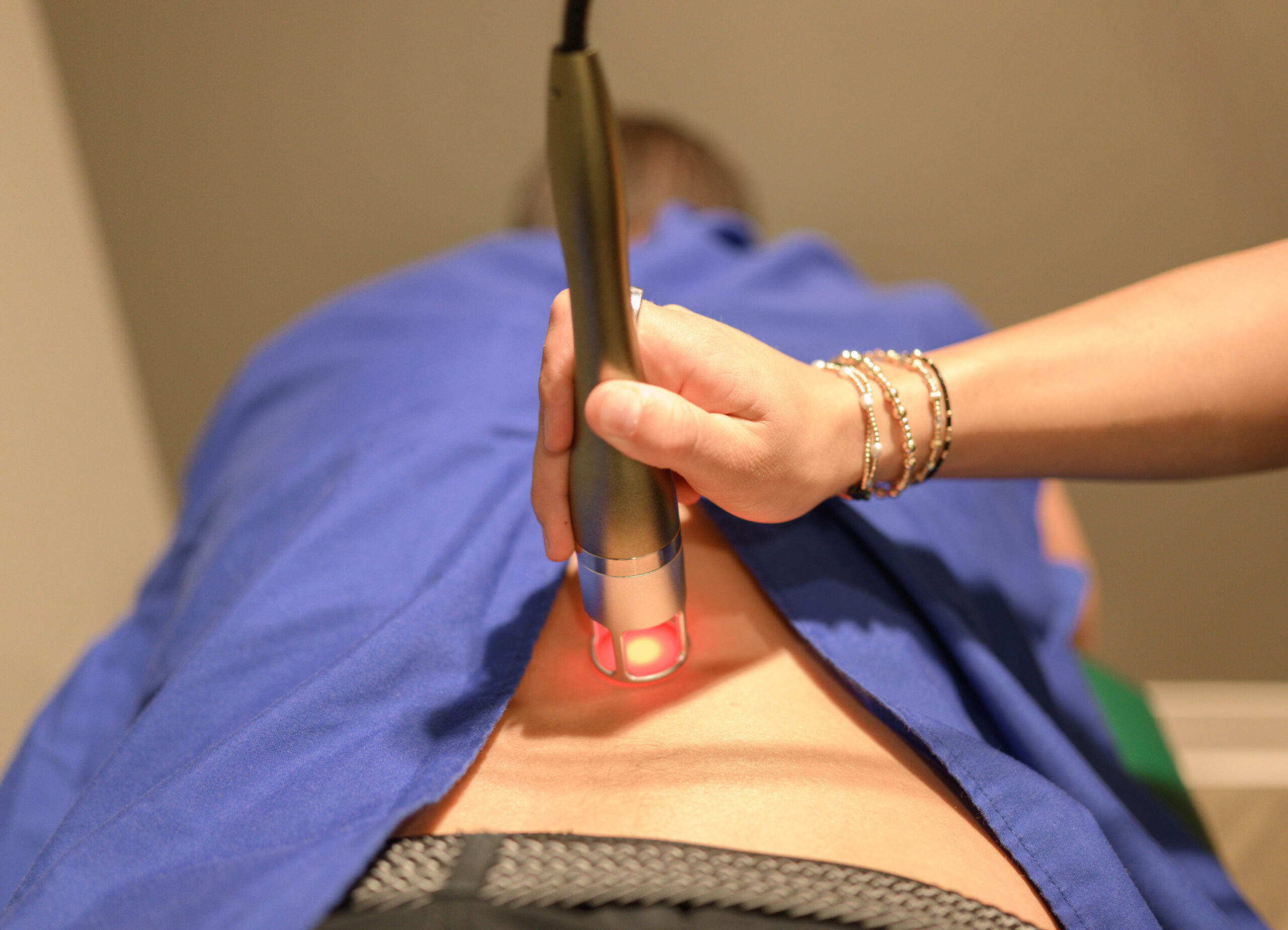
- Class IV laser therapy: to calm inflammation and support healing
- Rehab exercises: core and hip strength so your back stays better
Every plan starts with an exam, and we only recommend what fits your case.
Related Conditions
- Facet arthropathy and lumbar sprain/strain
- Sciatica
- Disc herniation
- SI joint dysfunction

What You Can Do at Home
- Keep moving with short, easy walks; long bed rest usually slows recovery
- Use ice or heat for 15–20 minutes at a time, whichever feels better
- Change positions every 30–45 minutes when you sit
- Lift with your hips and knees and keep the load close to your body
- Sleep on your side with a pillow between your knees
We will tailor these to your exam and add exercises that fit your goals.
What to Expect at Your First Visit
Your first visit takes about 45 minutes. We start with your health history and a hands-on exam of posture, movement, joints and muscles and, when needed, a neurological screen of reflexes, strength and sensation. We explain what we find in plain language and start treatment that day if it is appropriate.
You leave with a clear plan: how often to come in, what to do at home and how we will measure progress. If anything suggests you need imaging or a medical doctor, we tell you and help you arrange it.
Who Will Treat You?
Your care is led by Dr. Austin Weaver, who has a special focus on neurological conditions, working with our team of three chiropractors at Lincoln Family Chiropractic. A chiropractic assistant may help with therapies such as laser or rehab exercises, always supervised by the doctor.
When to See a Medical Doctor First
Call your doctor, go to urgent care or call 911 if you have:
- Loss of bladder or bowel control, or numbness in the groin or inner thighs (go to the ER)
- New weakness in a leg or foot, or a foot that drags
- Back pain after a major fall or car accident
- Fever, unexplained weight loss or a history of cancer
- Severe pain at night that does not change with position
If anything in your exam points to a problem outside our scope, we will tell you and help you get the right care.
Frequently Asked Questions
Is chiropractic care effective for low back pain?
For many people, yes. Major clinical guidelines recommend spinal manipulation, exercise and staying active as first-line, drug-free options for both new and long-lasting low back pain. We combine them based on your exam.
Do I need an X-ray or MRI first?
Usually not. Most low back pain does not need imaging. If your exam shows warning signs, or you are not improving as expected, we refer you for imaging or to a medical doctor.
How many visits will I need?
It depends on the cause and how long you have had it. We re-check your progress regularly and adjust the plan. Our goal is to get you managing on your own.
Should I use heat or ice?
Either is fine. Many people like ice in the first couple of days after a strain and heat for stiffness. Use it for 15–20 minutes at a time.
Can I keep working out?
Usually yes, with changes. We will tell you which movements to pause for now and which ones help you heal.
Why Lincoln Family Chiropractic?
- Three experienced chiropractors who work together on your care
- Many tools under one roof: adjustments, soft-tissue therapy, decompression, laser, shockwave, dry needling and rehab
- A clear plan and home exercises from your first visit
- Same-week appointments for new patients and online scheduling
- Convenient location off 70th & A St (near Sumner) with easy parking
- Insurance and HSA/FSA accepted, and our team checks your benefits
Related Services
Care for low back pain often includes these services and pages:
Get Help for Low Back Pain in Lincoln, NE
If low back pain is keeping you from work, sleep or the things you enjoy, we can help you find out what is going on and build a plan to get you moving again.
📞 Call Lincoln Family Chiropractic at (402) 484-5166 or schedule your appointment online today.
Disclaimer
This page is for general education and is not a diagnosis or a substitute for medical care. Results vary from person to person. If you have severe or worsening symptoms, contact your doctor or call 911.